Shop > Monographs
#12155
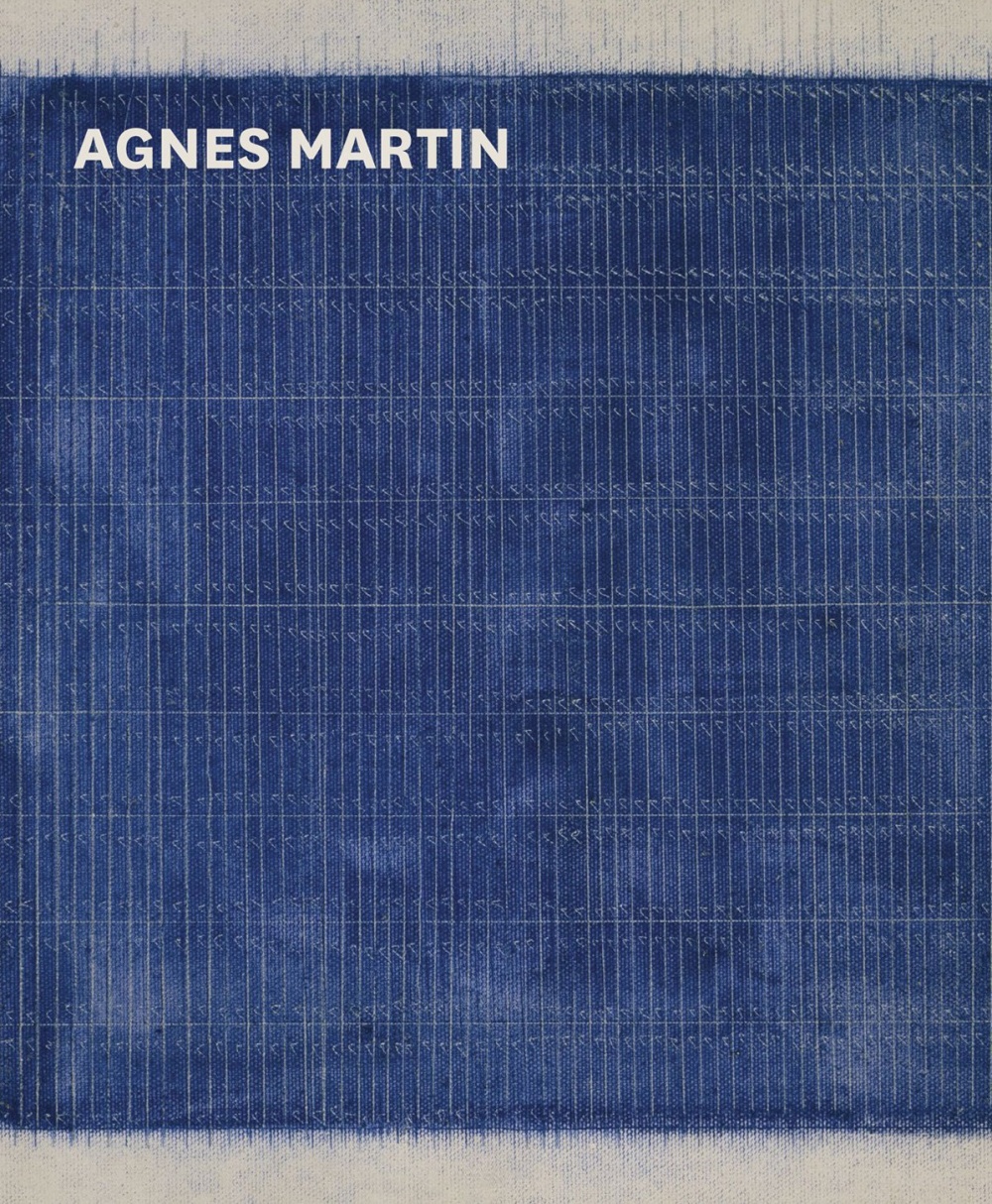
Agnes Martin
- Artist
- Agnes Martin
- Date
- 2015
- Publisher
- d.a.p.
- Format
- Monographs
- Size
- 8.3 × 10.5 × 1.3 in
- Length
- 272 pgs
- Genre
- Art History, Painting, Essays
Agnes Martin was one of the preeminent painters of the twentieth century, whose work has had a significant influence both on artists of her own time and for subsequent generations. A contemporary of the Abstract Expressionists though often identified with Minimalism, Martin was one of the few women artists who came to prominence in the predominately masculine art world of the late 1950s and 1960s, and she became a particularly important role model for younger women artists. This groundbreaking survey provides an overview of Martin’s career, from lesser-known early experimental works through her striped and gridded grey paintings and use of color in various formats, to a group of her final pieces that reintroduce bold forms. A selection of drawings and watercolors is also included. With essays by leading scholars that give a context for Martin’s work—her life, relationship with other artists, the influence of South-Asian philosophy—alongside focused shorter pieces on particular paintings, this beautifully designed volume is the definitive publication on her oeuvre.
Agnes Martin was born in Maklin, Saskatchewan, Canada, in 1912, and moved to the US in 1932, studying at universities in Oregon, California, New Mexico and New York. She painted still lifes and portraits until the early 1950s, when she developed an abstract biomorphic style influenced by Abstract Expressionism. Her first one-woman exhibition was held at the Betty Parsons Gallery, New York, in 1958. Partly through close friendships with artists such as Ellsworth Kelly and Ad Reinhardt, Martin began to experiment with symmetrical compositions of rectangles or circles within a square, then from around 1960–61 to work with grids of delicate horizontal and vertical lines. She left New York in 1967, shortly after the death of Reinhardt, and moved to New Mexico, where she lived until her death in 2004.
Hardcover, b&w and colour throughout.
Related Items


- Art Metropole
- 896 College St
- Toronto, Ontario
- M6H 1A4 Canada
- +1 416 703 4400
- Hours:
- Tuesday to Sunday
- 11AM to 6PM
Art Metropole is a non-profit artist-run centre established 1974 as a division of Art-Official Inc. We are grateful for the support of the Canada Council for the Arts, the Ontario Arts Council, the City of Toronto through the Toronto Arts Council, as well as our donors, members and volunteers.
Your donation assists in the development of contemporary art practices and programs for the general public. Art Metropole is certified by the Ontario Living Wage Network.
- Toronto Arts Council
- Ontario Trillium Foundation
- Canada Council
- Ontario Arts Council
