Shop > Anthologies
#16929
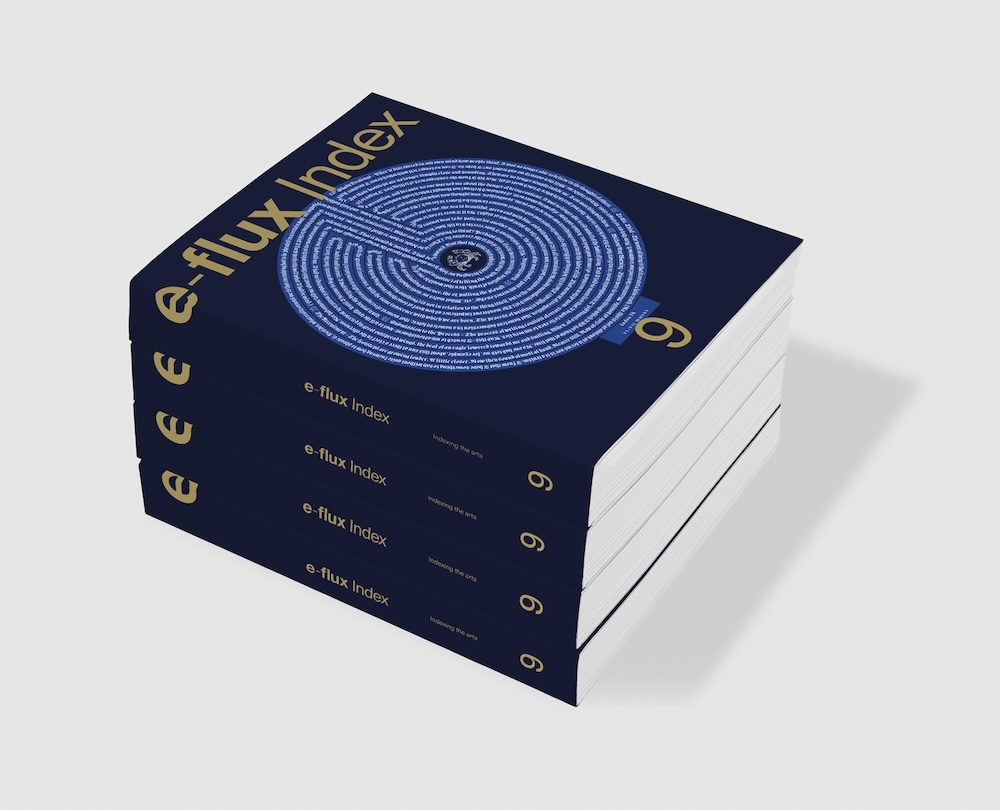
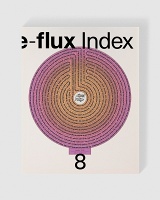
e-flux Index #9
- Price
- $45.00
- Date
- 2026
- Publisher
- e-flux
- Format
- Anthologies
- ISBN
- 299971950
- Size
- 20.3 × 25.4 × 4.5 cm
- Length
- 600 pp
- Genre
- Arts Writing, Criticism, Theory, Available for Wholesale
Did the Theory Wars take place?
As quaint as they may now seem at thirty years distance (under febrile geopolitical conditions that for an increasing share of the world are those of actual wars that did take place, or their looming inevitability), the Theory Wars, and the fissures they opened in the modern academy and wider cultural sphere, supplied many of the (anti)intellectual coordinates for the “moving right show” under which so many of us have now been living since the mid-2010s. Indeed, the outright refusal of the patient mediation of theory seems in retrospect to have defined culture in the 2010s and 2020s: Move fast and break things. First thought, best thought. No filter. Immediacy culture. Bomb first, talk later. The late fascist assault on so-called “gender ideology” and “post-modern neo-Marxism.” The online injunction to “let people enjoy things.” Judith Butler, certainly no friend of Sokal and his comrades, anticipated this in the late 1990s when they wrote that the marginalization of “merely cultural” lines of inquiry under the auspices of restoring Left unity, could in fact only portend the Left’s further weakening and fragmentation.
This ninth issue of e-flux Index interweaves a selection of pieces published by e-flux throughout the Summer of 2025, and is divided into two parts. In six chapters that index the state of Art and Theory Today, the first part revisits the primal scene of the Theory Wars—the tenor of which has changed, from an urgent ideological contest between humanist objectivity and postmodern relativism, to a more even-handed, pragmatic, and pluralist one, in the decades since. It brings together material that the various independent publishing arms of e-flux published around the theme of the often-fraught relations between theory and (artistic, architectural, pedagogic, political) practice.
Related Items
- Art Metropole
- 896 College St
- Toronto, Ontario
- M6H 1A4 Canada
- +1 416 703 4400
- Hours:
- Tuesday to Sunday
- 11AM to 6PM
Art Metropole is a non-profit artist-run centre established 1974 as a division of Art-Official Inc. We are grateful for the support of the Canada Council for the Arts, the Ontario Arts Council, the City of Toronto through the Toronto Arts Council, as well as our donors, members and volunteers.
Your donation assists in the development of contemporary art practices and programs for the general public. Art Metropole is certified by the Ontario Living Wage Network.
- Toronto Arts Council
- Ontario Trillium Foundation
- Canada Council
- Ontario Arts Council
