Shop > Monographs
#16846
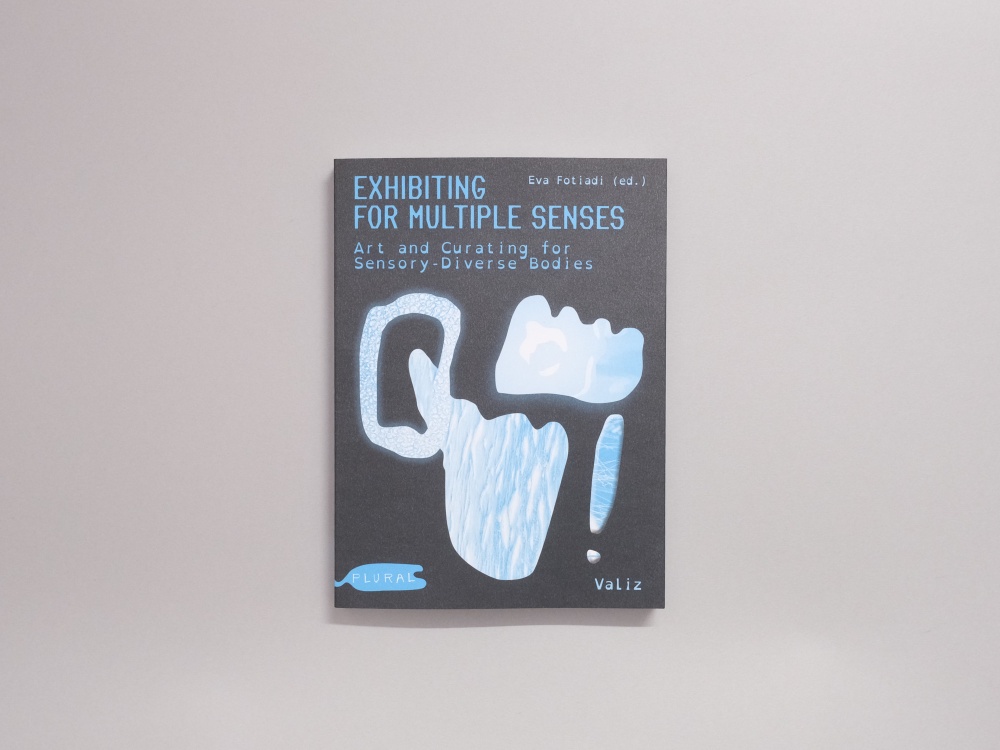
Exhibiting for Multiple Senses Art and Curating for Sensory-Diverse Bodies
- Writer
- Eva Fotiadi
- Editor
- Eva Fotiadi
- Date
- 2025
- Publisher
- valiz
- Format
- Monographs
- ISBN
- 978-94-93246-48-5
- Size
- 17 × 23 cm
- Length
- 192 pp
- Genre
- Activism, Arts Writing, Curating
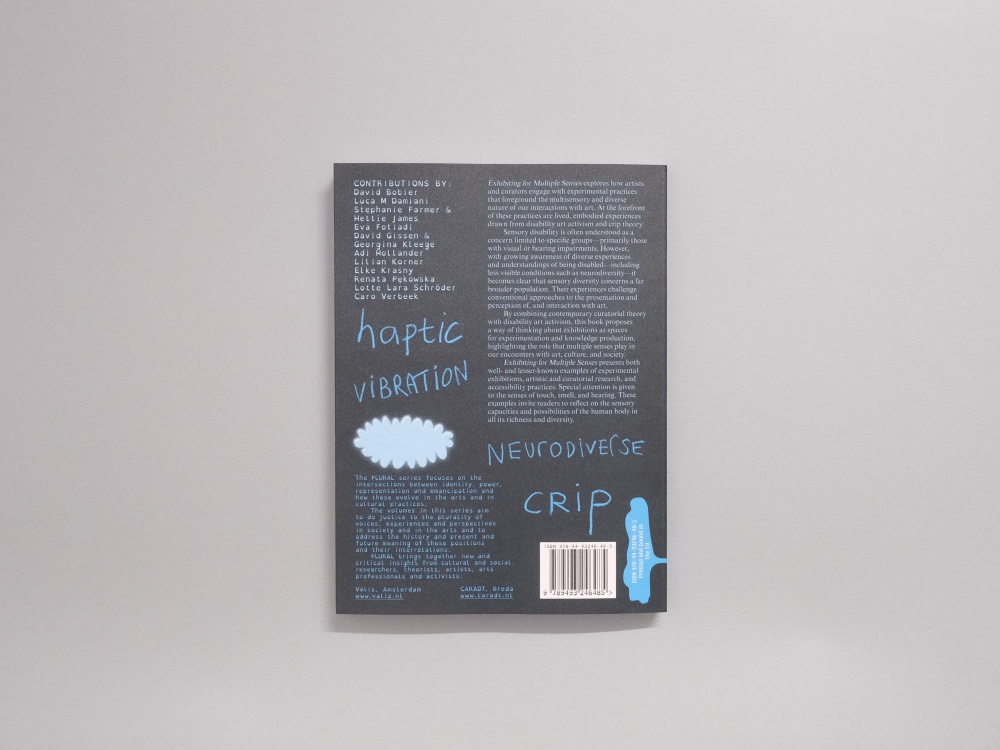
Exhibiting for Multiple Senses looks into artistic and curatorial research practices that emphasize the multisensory character of the human body in the encounter with artworks. For some time now, numerous contemporary artists and curators have moved beyond the primacy of the visual in the experience of art exhibitions. The book discusses this shift by bringing together experimental exhibition-making, curatorial theory, art, design, and museum research, disability activism and crip theory. Its intent is to demonstrate resonances between curatorial theory and practice and between disability and crip art activism. While the latter is still often regarded as relevant for only small portions of visibly disabled people, in recent years neurodiversity and invisible disabilities have proven to be relevant for the sensory experiences of much larger parts of exhibition audiences.
Exhibiting for Multiple Senses shares famous and lesser-known examples of experimental exhibitions as well as of artistic practices linked to exhibitions. By mobilizing the senses of touch, smell, taste, and hearing, as well as applications of multimodal technologies and insights from neuroscience, these examples all explore abilities and possibilities of the complex and diverse sensory apparatus that is the human body.
Related Items








- Art Metropole
- 896 College St
- Toronto, Ontario
- M6H 1A4 Canada
- +1 416 703 4400
- Hours:
- Tuesday to Sunday
- 11AM to 6PM
Art Metropole is a non-profit artist-run centre established 1974 as a division of Art-Official Inc. We are grateful for the support of the Canada Council for the Arts, the Ontario Arts Council, the City of Toronto through the Toronto Arts Council, as well as our donors, members and volunteers.
Your donation assists in the development of contemporary art practices and programs for the general public. Art Metropole is certified by the Ontario Living Wage Network.
- Toronto Arts Council
- Ontario Trillium Foundation
- Canada Council
- Ontario Arts Council
